How Personalized SEO Is Changing Search Rankings in Modern Search Engines
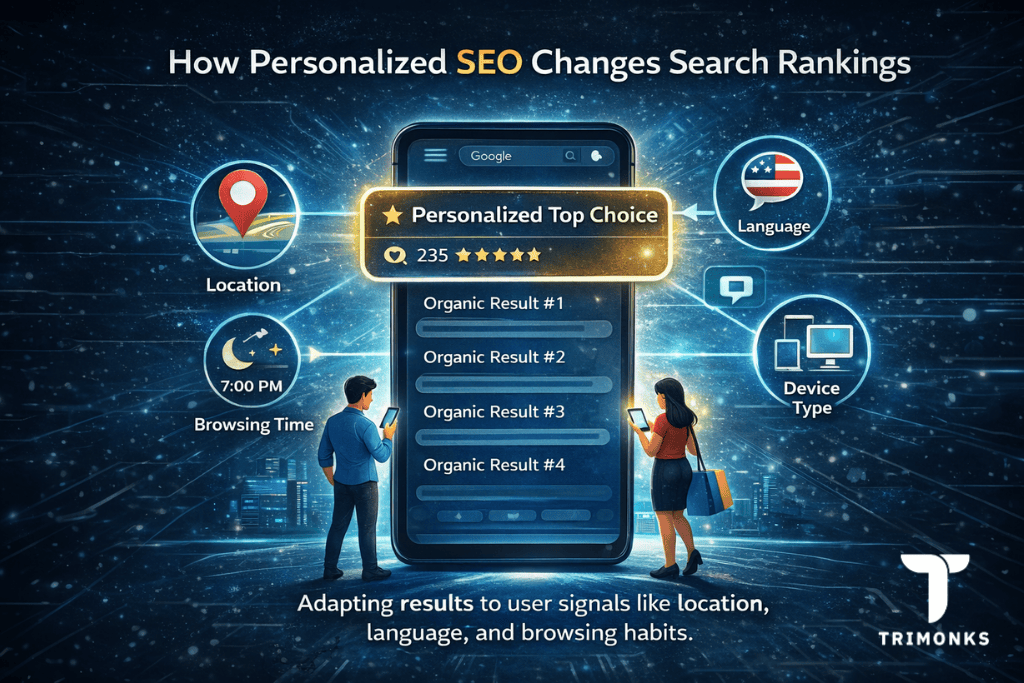
Personalized SEO is the practice of tailoring search visibility and website experiences based on user signals such as location, language, device type, and browsing behavior. Modern search engines use these signals to deliver personalized search results, meaning two users searching the same keyword may see completely different rankings.
As search algorithms evolve, search intent personalization and contextual search SEO are becoming essential for businesses that want to remain visible in modern search engines. In simple terms, personalized SEO means optimizing content so search engines can deliver personalized search results based on user behavior signals and context.
In this guide, we will break down how personalized SEO works and why modern search engines no longer show the same results to every user.
How Search Rankings Evolved Toward Personalized SEO in India
Over the past decade, rankings in India moved from one‑size‑fits‑all lists to context‑aware results that reflect where someone is, what they looked for, and which device they use. A search for a salon near me in Bengaluru at 7 pm on a phone feels different from the same search in Indore at noon on a desktop. That gap is not random. It is the outcome of seo personalization that blends intent signals with local data, languages, and history.
For Indian brands, this shift rewards custom SEO thinking. Pages and profiles that signal the right city, the right script, and the right service type can surface more often for the right people. Think of this as personalized search engine optimization that respects regional nuance and everyday context rather than chasing a single national rank.
Personalized SEO: Definition, Benefits, and Risks
Personalized SEO means shaping your organic footprint for segments instead of a generic average. The upside is clear. Better intent match. Higher dwell time. Lower bounce. More conversions. The catch is real too. Over-targeting can fragment URLs, create duplicate content, and confuse crawlers when layouts or copy swing too much between users.
Benefits: Stronger engagement signals, local relevance, language fit, and clearer paths to conversion.
Risks: Duplicate URLs, cloaking‑like patterns from heavy dynamic swaps, inconsistent metadata, and privacy missteps if data use is not transparent.
A balanced approach to seo customization keeps core content stable while varying helpful modules such as location hints, inventory, or nearby services. That balance grows trust with users and search engines alike.
How Search Engines Use User Behavior Signals to Personalize Rankings
Search engines analyze user behavior signals such as clicks, dwell time, and previous search patterns to determine which results are most relevant for each individual user. Search engines tailor results with a mix of language, location, past searches, device context, and engagement history. Brands that reflect these signals clearly are more likely to meet intent and win the click. The mechanics are not secret. They are user-centered and data-driven.
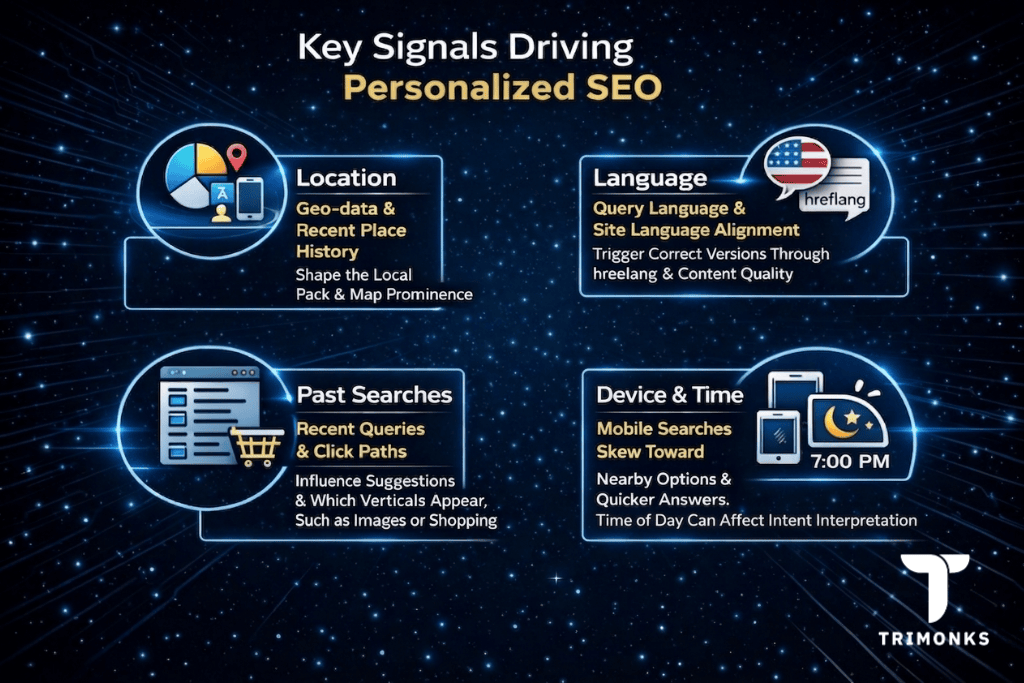
Signals that Drive Personalization
- Location: Geo-data and recent place history shape the Local Pack and map prominence.
- Language: Query language and site language alignment trigger correct versions through hreflang and content quality.
- Past searches: Recent queries and click paths influence suggestions and which verticals appear, such as images or shopping.
- Device and time: Mobile searches skew toward nearby options and quicker answers. Time of day can affect intent interpretation.
This approach is often referred to as contextual search SEO, where search engines evaluate the context of the user rather than only the keyword. The more a page clarifies who it serves and where it serves, the fewer mixed signals it sends.
SERP Features Most Affected by Personalized Search Results
| Feature | Personalization Effect |
| Local Pack and Maps | Shifts by precise location, proximity, and business profile strength. |
| Autocomplete | Reflects recent searches and language preferences. |
| People Also Ask | Adapts to user intent patterns and region‑specific queries. |
| Shopping and Products | Tilts to nearby inventory and past browsing behavior. |
| Discover and Video | Heavily interest based using past engagement signals. |
How Personalized Search Results Affect SEO Ranking Tracking
- Rankings differ by city, device, and login state. A single average rank tells half the story at best.
- On‑site personalization can hide content from crawlers if the server returns lean HTML and swaps content only in the browser.
- Testing with location‑clean proxies and logged‑out states gives a baseline. Segment reports by market and device to see the real picture.
SEO Customization Tactics for Indian Markets
India is not one market. There are many cultures, languages, and buying patterns. Custom seo that respects that diversity performs better and feels more human.
Content Localization and Language Targeting Across Regions
- Create complete language versions in Hindi, Tamil, Telugu, Bengali, Marathi, and others where demand exists. Avoid half-translated shells.
- Use the hreflang attribute with correct language and region pairs. Canonicalize the primary version to prevent duplication.
- Local idioms matter. A personalized service example for Delhi commuters reads differently than for Coimbatore families. Match examples and visuals to local life.
Technical Cues and Structured Data for Customization
- Implement Organization, Local Business, Product, and FAQ schema to clarify who you are and where you serve.
- Use consistent NAP data on site and in profiles. That supports map confidence for each location.
- Stabilize URLs. Avoid creating a new URL for every user segment. Keep one canonical per intention. Vary modules within the page.
Individualized SEO for Local, Voice, and Mobile Searches
- Local: Build one page per city or store with unique content, local photos, and directions. Link to the Google Business Profile for that location.
- Voice: Answer spoken questions in plain language. Short answers near the top. Mark them up with FAQ schema.
- Mobile: Prioritize speed and clarity. Key actions above the fold. Keep geotargeted hints in the HTML so crawlers can see them.
Implementing Customized SEO: Steps and Tools
Good personalization begins with clean data and stable tech. Start simple. Then scale with workflows that protect crawlability and rankings.
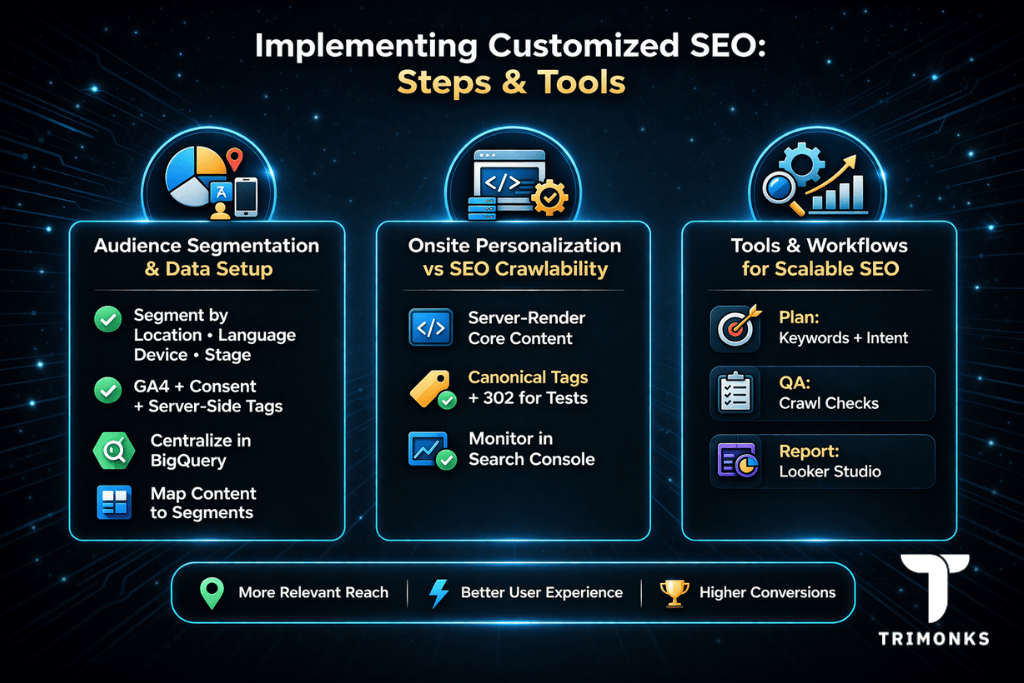
Audience Segmentation and First‑party Data Setup
- Define segments by location, language, device, and lifecycle stage. Outcome is a clear grid of who gets what content.
- Instrument analytics and consent. Use Google Analytics 4, a consent banner, and server-side tags. Outcome is compliant data collection.
- Centralize events in a data warehouse such as BigQuery. Outcome is one source of truth for personalization rules.
- Map content modules to segments. Outcome is a reusable library of blocks such as local inventory, city testimonials, or regional FAQs.
Onsite Personalization vs SEO Crawlability and Indexation
- Render essential content on the server. Keep the primary message and internal links in the HTML. Swap supportive modules client-side.
- Use canonical tags on all variants. Block test URLs in robots when running experiments. Prefer 302 temporary redirects during A/B tests.
- Monitor coverage in Search Console. Check sitemaps and inspect a sample of pages that include dynamic content.
Tools and Workflows for Custom SEO at Scale
- Planning and content. Use keyword and intent tools with audience research. Write for questions people actually ask in each market.
- Quality control. Use crawling tools to catch duplicate titles, conflicting canonicals, or bloated templates.
- Content scoring. Consider editors with language expertise rather than auto-translation. Personal seo tips always start with clarity and consistency.
- Reporting. Build segmented dashboards in Looker Studio. Slice by city, language, and device. That view guides smart bets.
Measuring Impact: KPIs and Testing for SEO Personalization
Segmented measurement tells you if customized experiences help real people do real tasks. It also stops guesswork.
Segmented KPIs and Dashboards for Different Audiences
- Organic clicks and CTR by city and language.
- Dwell time, bounce, and pages per session for each segment. Better alignment should lift these measures.
- Conversion rate on key actions such as call, visit a store, or add to a cart.
Testing Personalization with A/B and Holdout Experiments
- Test one module at a time, such as local reviews or city-specific FAQs.
- Use 302 redirects for URL tests and keep the canonical on the main URL. Time box tests to avoid index drift.
- Run holdout groups where no personalization appears. Compare lifts in engagement and conversions. Validate seasonality before rolling out.
ROI and Attribution Modeling for Personalized Campaigns
- Attribute organic assisted conversions across visits. Personalized content often lifts later direct or brand searches.
- Estimate revenue per segment using location-specific margins or store data.
- Report ROI by segment and module. Retire modules that do not move the needle. Scale the ones that do.
Compliance, Ethics, and Privacy Considerations
People in India want useful content without data creep. That means transparent consent, clear value exchange, and minimal data collection. Start with first party signals that users willingly share. State how data shapes content in plain language. Keep personally identifiable data out of personalization rules unless it is required for service delivery.
From a search standpoint, ethical choices show up as trust. No surprise redirects. No bait and switch modules. No hidden content for bots. Consistency beats tricks. When in doubt, stabilize the page and show helpful regional details such as the nearest store, price in rupees, and language toggle that persists across the site.
Conclusion and Next Steps
Search is now personal. Rankings vary by audience and context. Personalized SEO strategies help businesses adapt to personalized search results across modern search engines. Teams like Trimonks embrace personalized SEO, deliver clearer answers to real people and gain compounding returns in local visibility, dwell time, and conversion. Start by segmenting audiences, stabilizing technical signals, and testing one helpful module. Then expand to more cities and languages. The next step is simple. Pick your highest impact segment and publish one page that serves it better than anyone else.