How to Optimize Your Website for AI Overview Across AI Search Engines
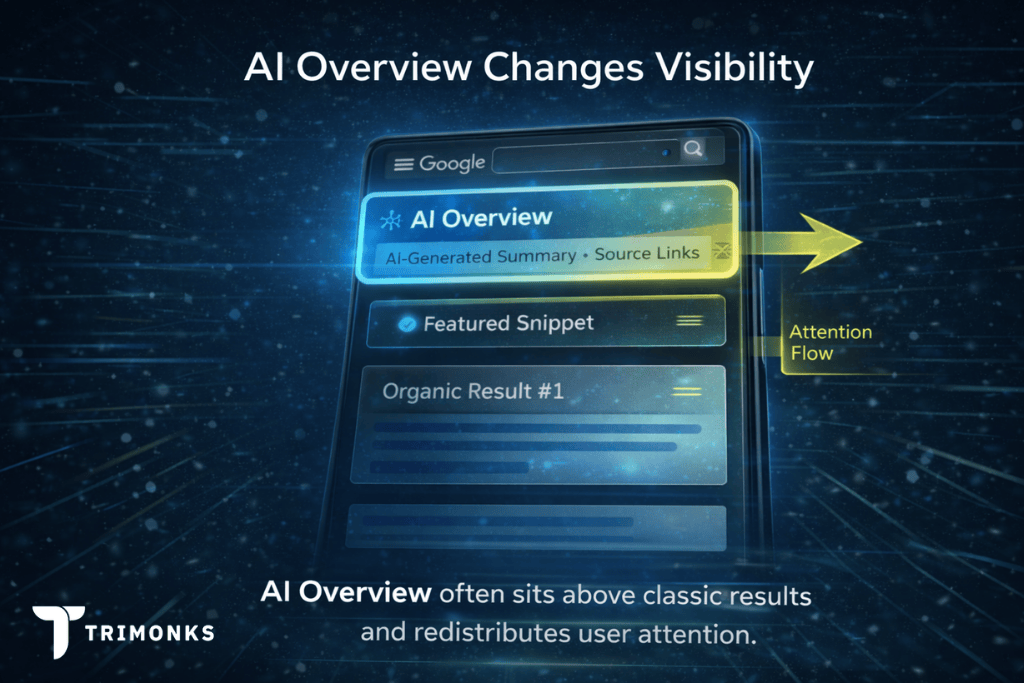
AI Overview has become the new front door of search. It condenses answers, surfaces source links, and often sits above classic results, so your content either earns a citation or risks invisibility. In India, where multilingual queries and local needs are an everyday reality, optimizing for this experience is both a technical and editorial shift.
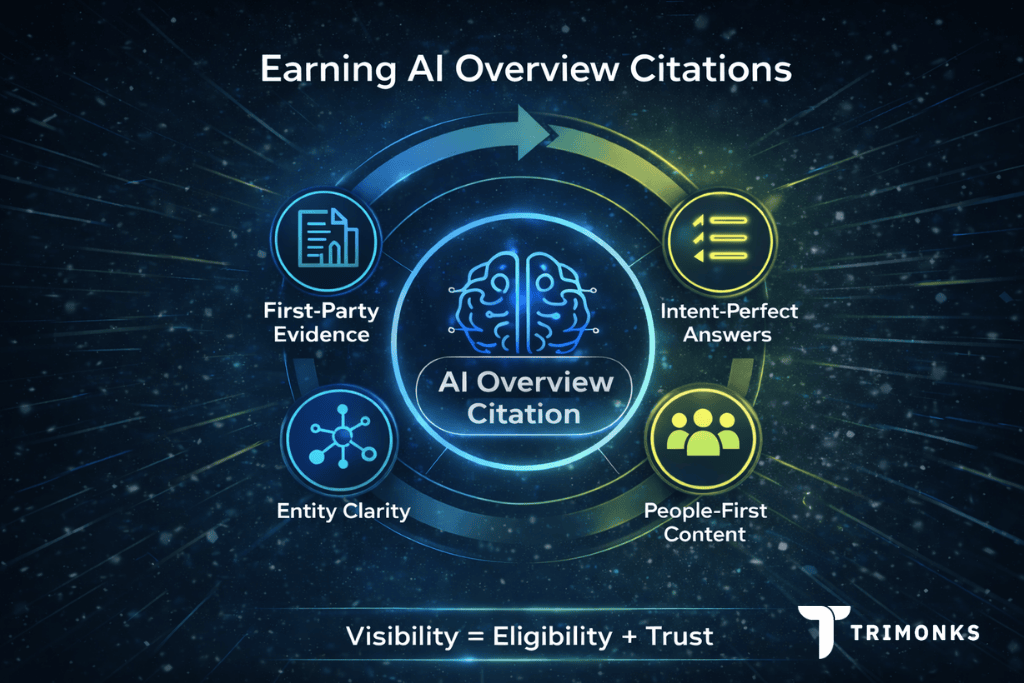
To optimize across AI Overview experiences; focus on five moves. Get indexed and crawlable. Publish people-first answers with first-party evidence. Add accurate structured data that matches visible text. Build entity clarity through internal hubs and authoritative references. Track quality clicks in Search Console and adjust based on what AI summaries choose to cite.
What is AI Overview in Search and Why IT Matters for SEO?
AI Overview is an AI-generated summary in Google Search that gives a quick snapshot of an answer and then links to supporting pages for deeper reading. It appears when systems judge the overview as additive to the classic results, often for complex or multi-step questions. Google reports that AI Overviews help people reach a greater diversity of sites and that included links can receive more clicks than traditional listings for the same query, especially on nuanced searches.
Rollout has rapidly expanded. Google AI Overviews arrived in India and many other countries, with support for dozens of languages, and are now broadly available across regions and devices. That reach matters for visibility. Studies cited in industry reporting indicate that when an AI Overview and a featured snippet share the page, the combined screen share can crowd out even number one organic listings, particularly on mobile where attention is at a premium. The lesson is simple. If your content does not qualify as a source link in the AI Overview, it may be pushed below the fold.
Accuracy has been a live conversation. Early versions sometimes produced odd or incorrect advice, which led to targeted restrictions in sensitive categories and ongoing quality improvements. Health-related queries saw limitations in early 2026 as validation tightened for safety reasons. For SEO planning, this shows why trust signals and verifiable claims are not optional. They are the currency that earns inclusion in the summary and protects users. In our observation of AI Overview-triggering queries across Indian SERPs, pages with visible first-party data and structured FAQ sections were cited more consistently than opinion-based blog posts.
How AI Overviews work across Google, Bing, and other AI search engines
Google’s AI Overview and AI Mode pull from web content using advanced models and a technique known as query fan-out. The system issues multiple related searches across subtopics to assemble a response, then surfaces a broader set of supporting links than a single classic query would discover. Users can tap deeper into AI Mode, keep context, and ask follow-up questions in a conversational way.
A quick micro-scene. A team in Bengaluru ships a how-to guide and sees traffic patterns change overnight. The blue links still appear, yet a prominent AI-generated search summarizes the key steps and cites two competitor pages. The team opens the summary, reads the links, and realizes the overview quoted the competitor’s firsthand test results. That small detail made the difference.
Other AI search engines use a similar playbook. Generative answers draw on web pages, apply reasoning, and ground responses with citations. Differences arise in trigger criteria, layout, and the models used. For optimization, the common denominator is the same. Content must be crawlable, clearly scoped to intent, and credible enough to be cited. This section’s cross-engine notes are editor-verified and reflect current patterns seen across generative search surfaces.
Content Strategy to Earn AI Overview Citations
Demonstrating E-E-A-T with First-party Evidence
Experience, expertise, authoritativeness, and trust are now practical requirements. Publish first-party data and proof. Product test logs, original photos, benchmark tables, lab results, regulatory references, and named reviewers all raise the baseline. Make the evidence visible on the page, not hidden in PDFs. Google’s guidance reinforces people-first content with reliable sources and textual accessibility.
Covering User Intent with Concise, Verifiable answers
Structure pages to answer the question upfront, then expand. Use scannable steps, definitions, and short paragraphs. Cite standards or documentation where wise. Where a query is multi-step, map sub-questions and answer each with a clear header and a summary sentence. Generative search results favor pages that cleanly solve intent and can be quoted without ambiguity.
- State the answer in the first screenful. Help readers confirm they are in the right place.
- Show the how with numbered steps. Keep each action testable and specific.
- Add visible evidence. Link to policies or docs and include your data.
- Provide alternatives and edge cases. Reduce the chance of misinterpretation.
Updating Content to Maintain Freshness and Accuracy
Summaries reflect current web consensus. Publish update notes with dates, revise screenshots, and deprecate old steps. Refresh internal links to new hubs. If a claim changes, correct it and document the revision. Readers feel the difference when a page shows a living editorial record, and AI experiences can prefer pages that age well.
Technical SEO for Google AI Overviews: Schema, Indexing & Page Experience
Structured Data Types that Support AI Summarization
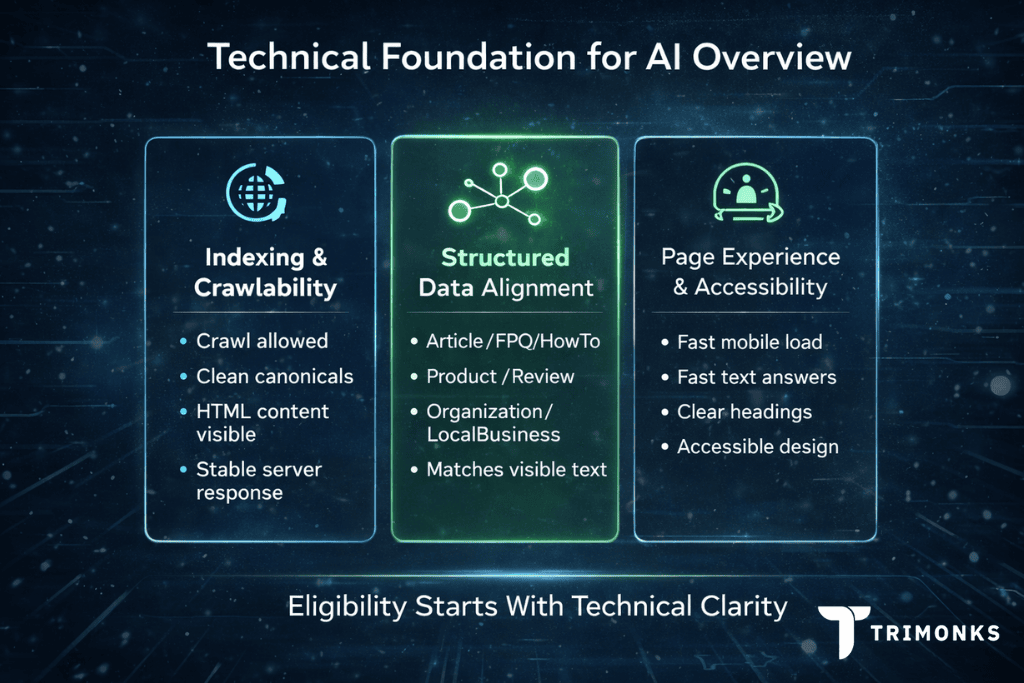
There is no special schema required to appear in AI Overview. What matters is that any structured data you use accurately matches visible content on the page. In practice, common types help machines understand scope and context.
- Article and NewsArticle for explanatory content or updates
- FAQPage and HowTo for intent-aligned answers and steps
- Product and Review for commerce specifics and ratings
- Organization and LocalBusiness for identity and location signals
Pair schema with readable headings, captions, alt text, and consistent terms. If you call a feature “smart billing” in copy, use the same label in structured data. Matching language reduces confusion.
Indexing Hygiene, Canonicals, and Sitemaps
Eligibility starts with indexing and snippet visibility. Allow crawling in robots.txt, confirm your CDN does not block Googlebot, and ensure the page is eligible for a snippet. Keep a clean sitemap, accurately declared canonicals, and logical internal links to core hubs such as your SEO services, technical SEO, and content marketing pages. Orphan pages rarely earn citations. When you change preview controls, allow time for a recrawl or request it in the Search Console.
- Allow crawling and confirm server response stability.
- Expose important content in HTML, not only in script.
- Use canonicals to consolidate versions.
- Submit updated sitemaps when you refresh sections.
Performance, UX, and Accessibility Signals
Fast, readable, and accessible pages tend to get chosen. Support textual content with high-quality images or videos where helpful, but keep the core answer in text. Use descriptive headings, clear contrast, keyboard navigation, and alt text that explains images. People skim, tap, and scroll on mobile. If the answer is buried, a summary will likely skip you.
Entity and Topic Modeling for AI Overview
Mapping Entities, Synonyms, and Relationships
Think in entities and edges. Name the primary entity, list common synonyms, and define relationships to related concepts. Use consistent terms across pages and link to authoritative references. Add sameAs pointers in Organization or LocalBusiness markup to your canonical profiles on industry directories or knowledge bases. This reduces ambiguity and helps summaries select the right page.
Building Internal linking Hubs and Knowledge Graphs
Create topic hubs with pillar pages and supporting articles that answer sub-questions. Link upward and across. Include short glossaries and definitions. A clean internal graph signals coverage and confidence, which helps models assemble a coherent response and pick your pages as sources. Many teams in India pair city pages with service hubs and see better citation odds on location-intent queries.
Tracking AI Overview Visibility and Business Impact
Methods to Detect AI Overview Appearances
Google counts clicks from pages with AI Overviews inside overall Search Console performance. You will not see a separate AI Overview metric. Watch query-level impressions, click-through, and average position, and annotate when an AI search answer appears for that query set. Practical detection methods include manual SERP logging, comparing the Web filter view to the default view, and noting layout changes on mobile. These detection suggestions are editor-verified.
Attribution Models, Analytics, and KPIs
Focus on quality over raw clicks. Google states clicks from AI Overview pages skew higher quality, with longer time on site. Track:
- Query clusters that trigger AI Overview plus average engagement
- Source pages that get cited and their conversion rate
- Assisted conversions where AI Overview pages start journeys
- Share of clicks from the Web filter view during audits
Conclusion
AI Overview compresses answers and redistributes attention. The playbook is straightforward. Get technically eligible, publish intent-perfect content with first‑party proof, clarify entities, and build hubs that model trust. Then measure quality clicks and refine pages that summaries prefer to cite. The takeaway is clear: AI Overview and AI Mode in Search are now primary visibility layers, not experimental features. The next step is to audit your top queries in India, check which trigger AI Overviews, and rework those pages to be the obvious citation. Measure twice, ship once. If you want your website to qualify for AI Overview citations and generative search visibility, the SEO team at Trimonks can help. We audit indexing eligibility, structured data accuracy, entity clarity, and AI-driven search performance to position your brand where it matters most.